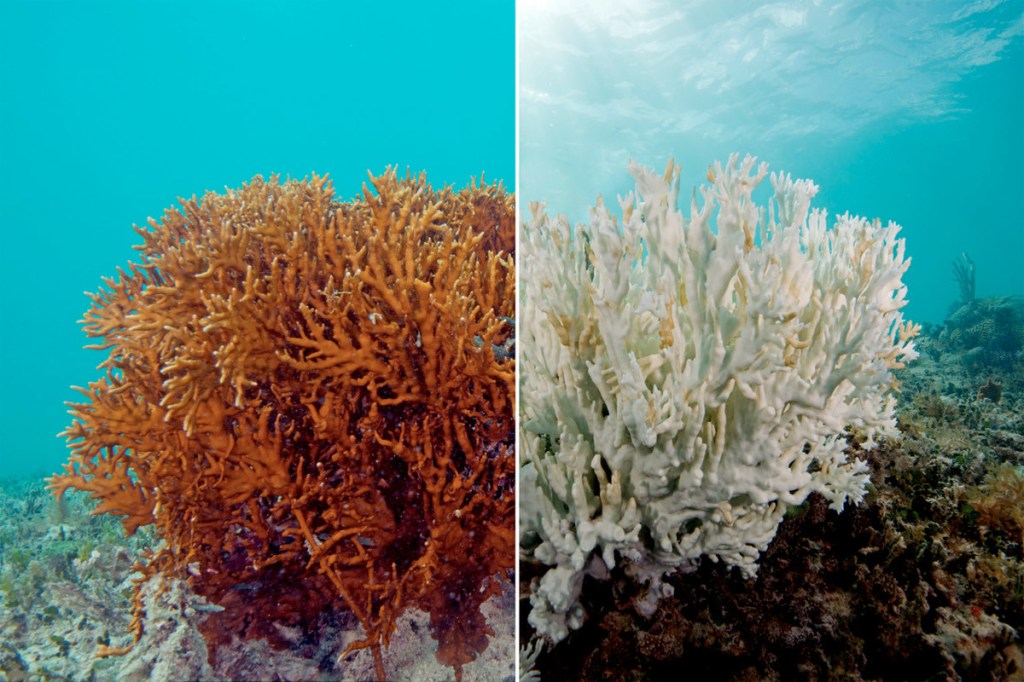
The Great Barrier Reef in Australia has been severely damaged by a variety of human factors over the years. In 2024, multiple organizations reported that the reef had experienced a huge mass bleaching event, causing immense damage. The reef cannot sustain this level of human induced damage. However, the good news is if humans have triggered negative changes, we can also mitigate them.
In 2024, multiple organizations including UNESCO and the Great Barrier Reef Foundation reported that increased global temperatures caused a reef wide bleaching event creating negative impacts on fish and reef marine life. Human accelerated climate change, along with other factors such as pollution, are endangering beautiful and delicate reef systems around the world. But before we can help recover such precious marine resources, we must first understand what the challenge we are facing is.
So, what is “coral bleaching”? Coral bleaching is a phenomenon caused by increased temperatures in the water that cause the coral to expel the algae living in them; this results in the algae taking on a white color. Algae in coral is essential to its survival. (Not to mention, they are what give the corals we know and love their beautiful and diverse coloration!) If ocean temperatures continue to increase, the coral will not allow the algae to grow back and thus, will die. Coral is the foundation of a reef ecosystem and if enough die, there reproduction rates will be drastically impacted. Such a decrease will cause entire reefs to wither away in the absence of the healthy coral.
The potential destruction of the Great Barrier Reef poses a massive ecological problem. The Great Barrier Reef is the largest coral reef ecosystem in the world, providing food, shelter, and the unique environment for thousands of animal species to survive. Just like animals and plants depend on the reef, so do humans. The Great Barrier Reef generates millions of dollars in income to the communities that surround it with tourist activities. Additionally, the reef provides local communities with a vast amount of food that is essential to their survival. In total, it is estimated the reef generates tens of billions of U.S. dollars per year. The loss of the reef would not only be a disaster for the animals that rely on the reef, but also humans too.
The good news, however, is if the damaged being caused is due to human actions, this also means we can help to stop these from continuing. The largest threats facing the reef’s integrity are climate change and pollution. Climate change causes the aforementioned coral bleaching and is worsened by human activities such as greenhouse gases, carbon emissions, and destruction of plant life. These effects can be lessened by a decrease in harmful and unregulated deforestation and a larger focus on sustainable energy. Much of the pollution affecting the reef is caused by local farming practices and the chemicals and fertilizers that are washed from farmlands, into the ocean, and onto the reef. These pollutants smother the coral and prevent them from absorbing valuable nutrients, additionally, they attract starfish which eat the coral.
The Great Barrier Reef is in grave danger and if it is destroyed millions of people and animals will feel the devastating effects. If we heed the warning signs and focus on saving this immense ecosystem we could prevent the collapse of a truly unique and vital environment. Human practices play a large part in damage to the reef and these harmful practices are largely born out of negligence, ignorance, and profit. It is both a blessing and a curse that the Great Barrier Reef and others are so important to our planet and economies. A blessing because they keep our planet healthy and provide us with beautiful ecosystems to visit, a curse because if we do not manage them well, we will lose entire marine species and natural resources of food and financial income.
Non-profit organizations like Frost Fund not only work to directly save individual animals, but also to support and donate to organizations that help lessen the effects of, and prevent, larger ecological events that negatively impact wildlife; such as the issues facing The Great Barrier Reef and its animal inhabitants.
With your donations and support Frost Fund can continue to help to save and protect wildlife, local and abroad. Would you consider making a donation today to help us grow into our second year and increase our outreach efforts? You can do so via one of the following methods:
- Zelle: teamfrostfund@gmail.com (Preferred because it doesn’t charge us service fees to withdraw.)
- Venmo: @frost_fund
Make a one-time donation
Make a monthly donation
Make a yearly donation
Choose an amount
Or enter a custom amount
Your contribution is appreciated.
Your contribution is appreciated.
Your contribution is appreciated.
DonateDonate monthlyDonate yearlyImage Credit: The Ocean Agency
 Frost Fund
Leave a comment