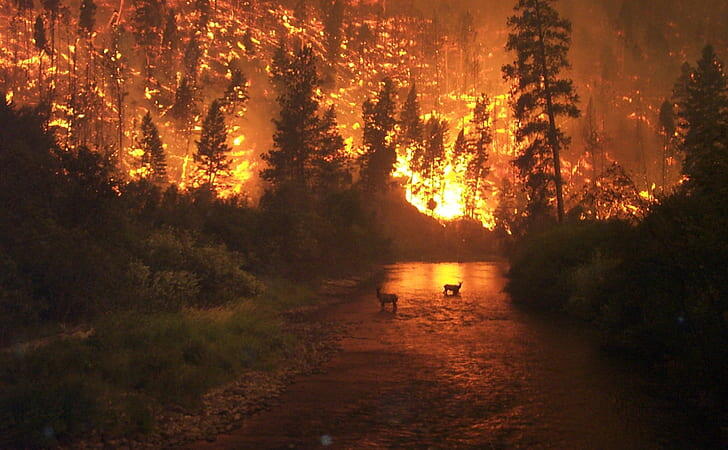
With the summer months approaching in California, so is the fire season. Of course we are always taught to be cautious as the weather gets drier and fire risk increases. We are always concerned with the massive damage fire can cause if it reaches inhabited areas, but what about the damage it can cause even when it doesn’t reach places people call home?
California has had no shortage of wildfires, especially in the last several years. While some of these fires were relatively unavoidable natural events, others were directly or indirectly caused by human activity. What is undeniable is the harm that these fires have caused, both to nature and people. Due to the inherent dry, desert nature of much of the state, it is not unnatural that wildfires occur. However, human activity can make these fires worse, both for us and for wildlife.
As previously mentioned, wildfires in California can be a natural occurrence. The goal should not be to completely prevent any and all wildfires from occurring because they do play an important part in California’s ecosystem. Wildfires help multiple plant species in spreading their seeding and sprouting new life in the wake of these fires. This creates a cycle of fire burning away vegetation and pushing out animal species allowing new plant life to blossom, usually more vibrant than before, which beckons more animals to return to the area. This natural cycle is good for plants and wildlife alike and in the long run is integral to the balance of the ecosystem.
The key to fires benefiting nature is that they occur naturally, which oftentimes they no longer are. Even when fires are born of natural causes, human interference and impact on the environment have led to wildfires being more frequent, more destructive, and less controllable. In an effort to make the landscape inhabitable year-round, great lengths have been taken to prevent and suppress natural and unnatural fires in California. This, coupled with droughts, has led to an unnatural overabundance of “weak” vegetation. Small brush that would have usually burned up by smaller fires have built up over time and is now easy fuel for new fires. This means fires are easier to start given the higher amount of combustible material, and once they do start they have an extremely large amount of fuel to burn, making them much harder to contain and extinguish.
So, what does this mean for wildlife? Due to the expanded destruction of these human influenced fires, wildlife cannot migrate a short distance like the usually would and are forced to travel further and further to find an area that won’t burn. Unfortunately, the areas to which these animals are often forced to flee are populated by humans. Of course, this is often not sustainable for the animals or humans, creating a conflict where there doesn’t need to be one.
This topic, like so many others, boils down to how human actions can easily create unintended conflict between humans and wildlife, which is undesirable for both parties. Even if some practices may seem innocent (preventing fires) we must consider the long term effects interfering in these natural processes will have. Nature is simultaneously incredibly resilient in its persistent survival, and also incredibly delicate in its responsiveness to human interference. After all, there is a reason nature has come to be the way it is, and we must consider the fact that nature seldom needs “fixing” by human touch.
Image Credit: National Audubon Society
 Frost Fund
Leave a comment